Додаткові семінари по робочому пакету 3
Ukrainian
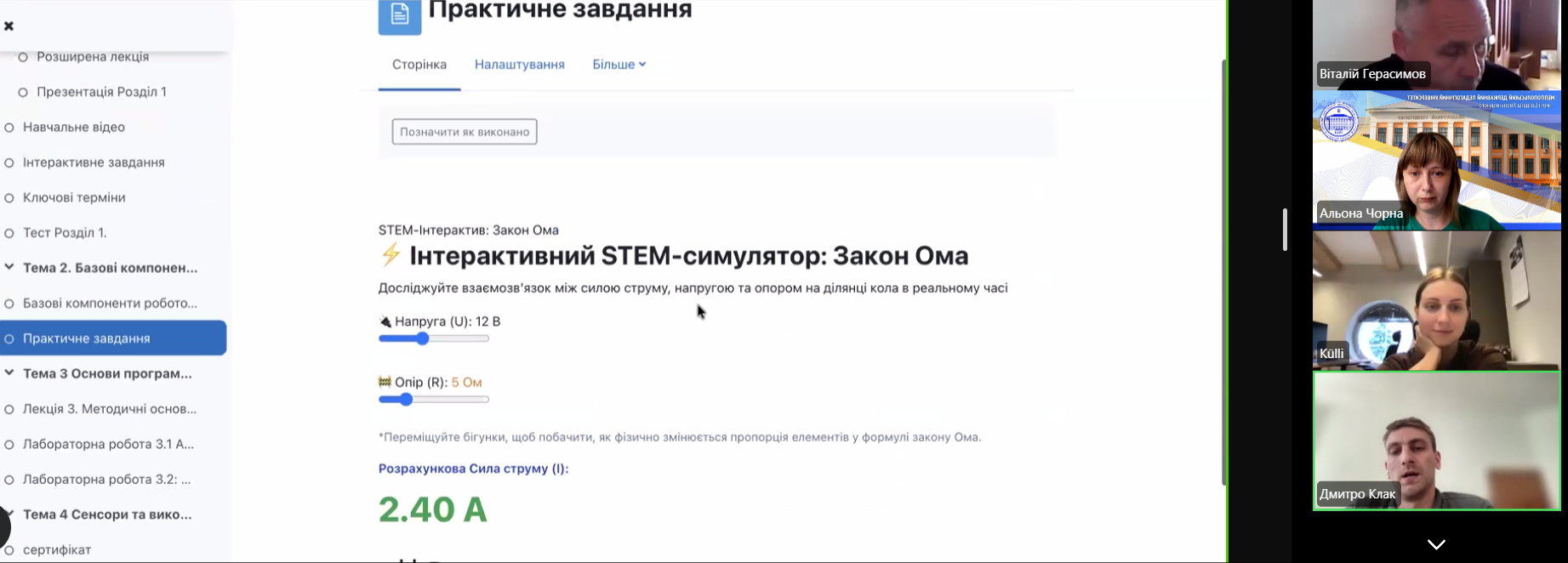
В рамках реалізації Міжнародного проєкту ERASMUS+ “Developing Future Educators’ Digital Competence Through Introducing Robotics into Curriculum” (Грантова угода № 101179514 – EduRob), а саме третього робочого пакету 3, який присвячений розробці освітнього компоненту з робототехніки для здобувачів вищої освіти в галузях дошкільної, початкової, середньої освіти, а також технічних спеціальностей, відбулася серія додаткових семінарів. Організаторами виступили фахівці Тартуського університету (м. Тарту, Естонія). Семінари тривали 9-10 червня 2026 року та були проведені окремо для представників груп розробників освітніх курсів, що сприяло дотриманню фокусу уваги саме на специфіці певної галузі.
Зустрічі стали логічним продовженням міжнародних консультацій за участю фахівців Тартуського Університету, Естонія. Якщо попередні обговорення були зосереджені переважно на структурі майбутніх курсів, результатах навчання та підходах до оцінювання, то під час червневих зустрічей основну увагу було приділено змістовому наповненню курсів, добору навчальних тем, методам викладання та практичній організації освітнього процесу. Учасники розглянули зміст і методичну побудову курсів, орієнтованих на інтеграцію робототехніки в підготовку майбутніх педагогів, обговорили логіку подання теоретичного матеріалу, організацію лабораторних і практичних занять, використання освітніх робототехнічних платформ, а також методи активного навчання, які сприятимуть формуванню цифрової компетентності майбутніх освітян. Окрему увагу було приділено практико-орієнтованому характеру курсів. Учасники наголосили на важливості поєднання теоретичних знань із виконанням прикладних завдань, проєктною діяльністю, командною роботою, аналізом педагогічних ситуацій та розробкою власних навчальних матеріалів із використанням робототехніки.
Проведені консультації стали важливим етапом у підготовці інноваційних освітніх курсів, спрямованих на розвиток цифрової компетентності, критичного мислення, командної взаємодії та готовності майбутніх педагогів до використання робототехніки в освітньому процесі. Робота над змістом курсів і навчально-методичними матеріалами триває, а результати міжнародної співпраці сприятимуть оновленню освітніх програм відповідно до сучасних європейських підходів до цифрової освіти.
English
As part of the implementation of the international ERASMUS+ project “Developing Future Educators’ Digital Competence Through Introducing Robotics into Curriculum” (Grant Agreement No. 101179514 – EduRob), specifically within Work Package 3 dedicated to the development of a robotics-based educational component for higher education students in preschool, primary, secondary education, as well as technical specializations, a series of additional seminars was conducted. The seminars were organized by experts from the University of Tartu (Tartu, Estonia). They took place on June 9-10, 2026, and were delivered separately for different groups of course developers, which ensured a focused approach tailored to the specific characteristics of each field.
The meetings served as a logical continuation of the international consultations conducted with experts from the University of Tartu, Estonia. While the previous discussions focused primarily on the structure of the future courses, learning outcomes, and assessment approaches, the June meetings concentrated on the course content, selection of learning topics, teaching methods, and the practical organization of the educational process.
The participants examined the content and methodological design of courses aimed at integrating robotics into the training of future teachers. Particular attention was given to the sequence and presentation of theoretical material, the organization of laboratory and practical sessions, the use of educational robotics platforms, and active learning methods that will contribute to the development of future educators’ digital competence.
Special emphasis was placed on the practice-oriented nature of the courses. The participants highlighted the importance of combining theoretical knowledge with hands-on tasks, project-based activities, teamwork, the analysis of pedagogical situations, and the development of educational materials incorporating robotics technologies.
The consultations represented an important stage in the development of innovative educational courses aimed at fostering digital competence, critical thinking, collaboration skills, and future teachers’ readiness to integrate robotics into educational practice. The work on course content and teaching materials is ongoing, and the outcomes of this international cooperation will contribute to the modernization of educational programmes in line with contemporary European approaches to digital education.
“Co-funded by the European Union. Views and opinions expressed are however those of the author(s) only and do not necessarily reflect those of the European Union or the European Education and Culture Executive Agency (EACEA). Neither the European Union nor the granting authority can be held responsible for them”.